Enjoy a helping of news!
WEEKLY EDITION
Week of February 20-28, 2026
AI
AI is threatening science jobs. Which ones are most at risk? |NATURE
Artificial intelligence is threatening many jobs, and those in science seem unlikely to be exempt. So which jobs are most at risk?
Five ways that AI could be reshaping your relationship with money |Phys.org
The financial industry is entering a new era, with AI and new regulations on accessing data transforming how finance works. These changes are giving people more options to manage their money in new ways—taking us closer to totally cashless transactions.
The greatest risk of AI in higher education isn't cheating—it's the erosion of learning itself |Phys.org
Public debate about artificial intelligence in higher education has largely orbited a familiar worry: cheating. Will students use chatbots to write essays? Can instructors tell? Should universities ban the tech? Embrace it?
People are swayed by AI-generated videos even when they know they're fake, study shows | Phys.org
Generative deep learning models are artificial intelligence (AI) systems that can create texts, images, audio files, and videos for specific purposes, following instructions provided by human users. Over the past few years, the content generated by these models has become increasingly realistic and is often difficult to distinguish from real content.
AI that talks to itself learns faster and smarter | ScienceDaily
AI may learn better when it’s allowed to talk to itself. Researchers showed that internal “mumbling,” combined with short-term memory, helps AI adapt to new tasks, switch goals, and handle complex challenges more easily. This approach boosts learning efficiency while using far less training data. It could pave the way for more flexible, human-like AI systems.
How AI Could Transform Billing, Payments, and Medtech's Rev Cycle |MDDI
Arrow’s CEO discusses how AI transforms medical billing, reduces claim denials, and improves revenue cycle management.
Gen Z Turning to AI for STD Help | MDDI
A new survey reveals 20% of Gen Z use AI chatbots for STI/STD questions, but chatbots misdiagnose 31% of cases, raising privacy and accuracy concerns.
How DeepMind's genome AI could help solve rare disease mysteries | NATURE
Hackathons using AlphaGenome and other AI models are hunting down the genetic causes of devastating conditions that have evaded diagnosis.
Scientists found a way to cool quantum computers using noise | ScienceDaily
Quantum computers need extreme cold to work, but the very systems that keep them cold also create noise that can destroy fragile quantum information. Scientists in Sweden have now flipped that problem on its head by building a tiny quantum refrigerator that actually uses noise to drive cooling instead of fighting it. By carefully steering heat at unimaginably small scales, the device can act as a refrigerator, heat engine, or energy amplifier inside quantum circuits
Generative AI analyzes medical data faster than human research teams | ScienceDaily
Researchers tested whether generative AI could handle complex medical datasets as well as human experts. In some cases, the AI matched or outperformed teams that had spent months building prediction models. By generating usable analytical code from precise prompts, the systems dramatically reduced the time needed to process health data. The findings hint at a future where AI helps scientists move faster from data to discovery.
BEING HUMAN
The Science Behind Why Cheek Fullness Changes How Strangers Read Your Emotions
When you meet someone for the first time, your brain processes their face in milliseconds. Within that brief window, you’re making judgments about their emotional state, trustworthiness, and approachability. What most people don’t realize is that the fullness of someone’s cheeks plays a surprisingly significant role in this rapid-fire assessment.
Ceramics: An Ancient Craft You Can Start Today
Ceramics is one of humanity’s oldest art forms, yet it remains one of the most accessible and rewarding creative practices you can pick up. Whether you’re drawn to the meditative rhythm of the pottery wheel, the tactile pleasure of hand-building, or the chemistry and surprise of glazing, ceramics offers a blend of creativity, craft, and patience that few other mediums match.
Are one in 200 men really related to Genghis Khan? Maybe not, according to a new study
"Even though the medieval genetic landscape of Central Eurasia is already known thanks to previous studies, we believe this is the first ancient DNA evidence to support the genomic ancestry of ruling elites in the Golden Horde," says Ayken Askapuli, lead author of the study and Ph.D. candidate at the University of Wisconsin–Madison.
POLITICS
U.S. government has lost more than 10,000 STEM Ph.D.s since Trump took office | Science | AAAS
Some 10,109 doctoral-trained experts in science and related fields left their jobs last year as President Donald Trump dramatically shrank the overall federal workforce. That exodus was only 3% of the 335,192 federal workers who exited last year but represents 14% of the total number of Ph.D.s in science, technology, engineering, and math (STEM) or health fields employed at the end of 2024 as then-President Joe Biden prepared to leave office.
MEDICINE MEDTECH AND BIOLOGY
Scientists develop first-of-its-kind antibody to block Epstein Barr virus |Medical Xpress
Johns Hopkins scientists say they have used 3D imaging, special microscopes and artificial intelligence (AI) programs to construct new maps of mouse brains showing a precise location of more than 10 million cells called oligodendrocytes. These cells form myelin, a protective sleeve around nerve cell axons, which speeds transmission of electrical and support brain health.
Top medtech trends to watch in 2026 | MedTech Dive
From M&A to surgical robotics and user fee negotiations, the medical device industry has a busy year ahead. Check out MedTech Dive’s roundup of the top medtech trends to watch in 2026.
Johns Hopkins scientists say they have used 3D imaging, special microscopes and artificial intelligence (AI) programs to construct new maps of mouse brains showing a precise location of more than 10 million cells called oligodendrocytes. These cells form myelin, a protective sleeve around nerve cell axons, which speeds transmission of electrical signals and support brain health.
Nitinol is making next-gen glaucoma implants safer and less invasive | MDO
Minimally invasive glaucoma surgery (MIGS, also known as microinvasive glaucoma surgery) is using nitinol to make symptom management for the progressive eye disease safer and increasingly personalized.
Saturday Citations: A virus that makes its own proteins; a new Spinosaurus; exercise beats anxiety | Phys.org
Johns Hopkins scientists say they have used 3D imaging, special microscopes and artificial intelligence (AI) programs to construct new maps of mouse brains showing a precise location of more than 10 million cells called oligodendrocytes. These cells form myelin, a protective sleeve around nerve cell axons, which speeds transmission of electrical signals and support brain health.
Are obesity drugs causing a severe complication? What the science says |NATURE
The potent GLP-1 drugs are taken by millions of people worldwide to counter obesity, heart disease, diabetes and more. However, a rare and potentially fatal illness that might be linked to these blockbuster therapies is now causing alarm in some countries.
'Digital blood testing' now at hand | MobiHealthNews
The success of a recent clinical trial of a wearable patch that tracks a patient's medication levels may indicate that the age of digital blood testing is near.
Doctors implant dopamine-producing stem cells in Parkinson’s patients | ScienceDailyA groundbreaking clinical trial is testing whether specially engineered stem cells can help the brain restore its own dopamine production in people with Parkinson’s disease. Because the condition is driven by the gradual loss of dopamine-producing cells—leading to tremors, stiffness, and slowed movement—researchers are implanting lab-grown cells directly into the brain’s movement center to replace what’s been lost.
Common pneumonia bacterium may fuel Alzheimer’s disease | ScienceDaily
A common bacterium best known for causing pneumonia and sinus infections may also play a surprising role in Alzheimer’s disease. Researchers found that Chlamydia pneumoniae can invade the retina and brain, where it sparks inflammation, nerve cell death, and the buildup of amyloid-beta—the hallmark protein linked to Alzheimer’s. Higher levels of the bacterium were found in people with Alzheimer’s, especially those carrying the high-risk APOE4 gene, and were tied to more severe cognitive decline.
New oxygen gel could prevent amputation in diabetic wound patients | ScienceDaily
Chronic wounds often spiral out of control because oxygen can’t reach the deepest layers of injured tissue. A new gel developed at UC Riverside delivers a continuous flow of oxygen right where it’s needed most, using a tiny battery-powered system. In high-risk mice, wounds healed in weeks instead of worsening. The innovation could dramatically reduce amputations—and may even open doors for lab-grown organs.
Doctors implant dopamine-producing stem cells in Parkinson’s patients | ScienceDaily
A groundbreaking clinical trial is testing whether specially engineered stem cells can help the brain restore its own dopamine production in people with Parkinson’s disease. Because the condition is driven by the gradual loss of dopamine-producing cells—leading to tremors, stiffness, and slowed movement—researchers are implanting lab-grown cells directly into the brain’s movement center to replace what’s been lost.
ANCIENT NEWS
“Celtic curse” hotspots found in Scotland and Ireland with 1 in 54 at risk | ScienceDaily
Researchers have mapped the genetic risk of hemochromatosis across the UK and Ireland for the first time, uncovering striking hotspots in north-west Ireland and the Outer Hebrides. In some regions, around one in 60 people carry the high-risk gene variant linked to iron overload. The condition can take decades to surface but may lead to liver cancer and...
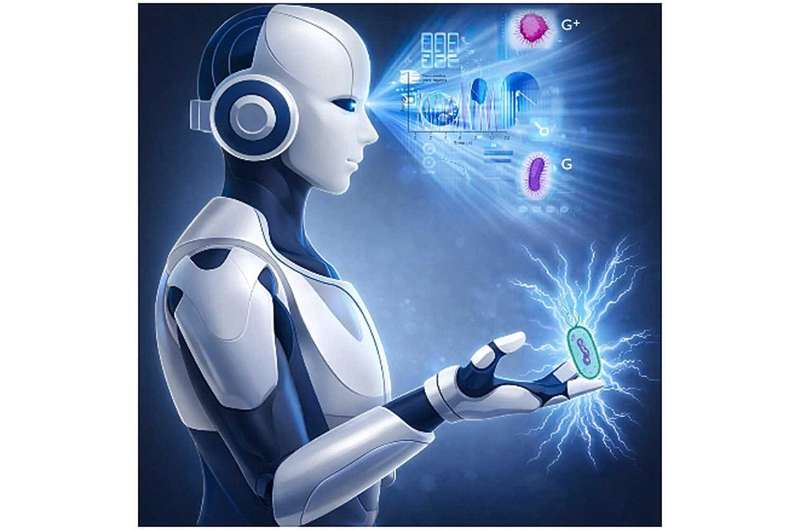
Frozen for 5,000 years, this ice cave bacterium resists modern antibiotics | ScienceDaily
Deep inside a Romanian ice cave, locked away in a 5,000-year-old layer of ice, scientists have uncovered a bacterium with a startling secret: it’s resistant to many modern antibiotics. Despite predating the antibiotic era, this cold-loving microbe carries more than 100 resistance-related genes and can survive drugs used today to treat serious infections like tuberculosis and UTIs.